
Black Mold in Your AC: Causes, Health Risks & How to Remove It
Finding dark spots on your AC vents is unsettling. Your first thought might be "black mold," and your second might be panic. The good news is that most mold found in AC units is treatable — especially when you catch it early. The part worth taking seriously is how an AC system works: it moves air through your whole house, so any mold growing inside gets distributed room by room every time you run it.
This guide covers why mold grows inside AC systems, what the science actually says about health risks (without exaggerating either way), how to tell if your system is affected, what safe removal looks like, and when the problem has grown large enough to need a professional.
Key Takeaways
Why Does Mold Grow Inside an AC Unit?
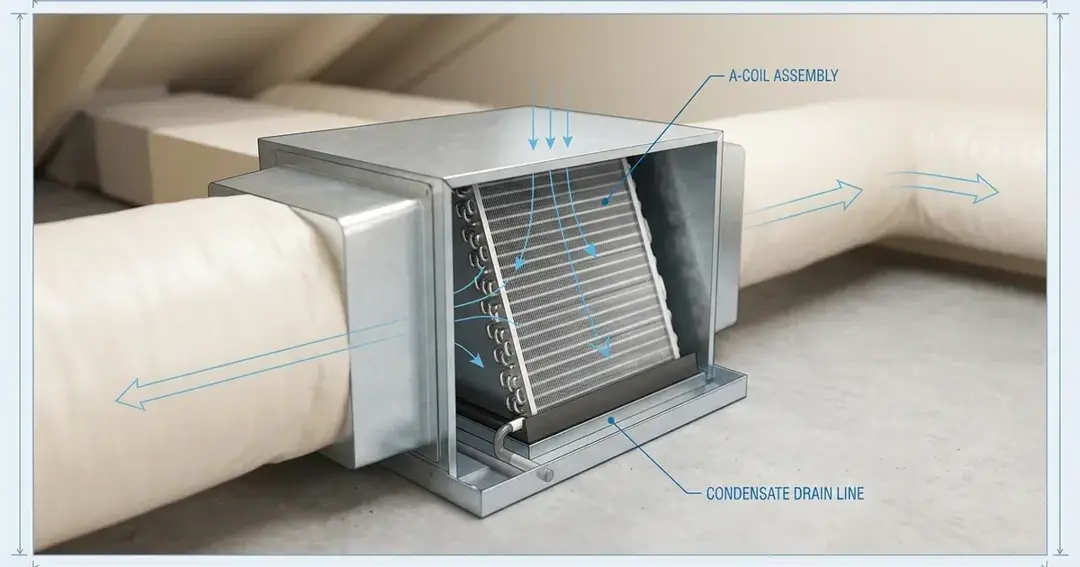
Mold needs three things to grow: moisture, a food source, and darkness. Your AC unit supplies all three without any help from you. The evaporator coil pulls heat out of your indoor air, and that cooling process creates condensation — a continuous supply of moisture dripping into the drain pan below. Dust and debris that pass through a dirty filter settle on the wet coil and pan, giving mold exactly the organic material it feeds on. The inside of your unit is dark and enclosed. The conditions are close to ideal.
The condensate drain line is where the trouble usually starts. That line carries moisture away from the drain pan to the outside. If it gets clogged with algae, dirt, or debris — which happens easily in Sacramento's summers when the system runs for months at a stretch — water backs up and sits in the pan. Standing water in a dark, dusty environment is a mold colony waiting to happen. Bryant HVAC's mold identification guide lists clogged drain lines as the leading cause.
High indoor humidity compounds the problem. The EPA recommends keeping indoor relative humidity between 30 and 50 percent (EPA Brief Guide to Mold, 2024). Above 60 percent, mold spores that land on a surface find enough moisture to colonize it within 24 to 48 hours.
Sacramento-specific note: The valley's summer heat is dry, so ambient outdoor humidity isn't usually the culprit here. The risk is indoor humidity from cooking, showers, or a tightly sealed home combined with a clogged condensate line — a slow, internal water problem the system can't drain away. The fog season from December through February brings a second, often-overlooked risk window as cold surfaces inside the unit condense moisture more aggressively.
Where Does Black Mold in AC Units Actually Hide?
Mold rarely appears in one spot and stays there. It follows the moisture and the airflow.
| Location | Why mold grows here | Warning sign |
|---|---|---|
| Evaporator coil | Constant condensation + dust = food + moisture | Reduced airflow, musty smell when running |
| Drain pan | Standing water when line is clogged | Visible dark slime, water overflow |
| Condensate drain line | Algae and debris create a clog that traps moisture | Water dripping near the air handler |
| Ductwork | Spores travel from coil; condensation at duct seams | Musty smell from specific registers |
| Supply vents and registers | First surface homeowners see; spores settle on metal | Dark discoloration around vent edges |
| Air filter | Mold on filter surface if left too long | Visible dark patches on filter media |
The most important distinction is between surface mold on accessible parts (coil cover, drain pan, registers) and mold inside the ductwork. Surface mold in accessible locations can often be addressed as a careful DIY project. Ductwork contamination is a different scale of problem. Ducts are sealed, hard to access, and difficult to dry — which means mold removal there almost always requires professional equipment.
According to Trane's HVAC mold resource, mold in ductwork is particularly difficult to address because cleaning efforts can dislodge spores and redistribute them if proper negative-pressure containment isn't used.
What Are the Real Health Risks of Black Mold in AC?
The phrase "black mold" tends to trigger alarm, but the science is more nuanced. Here's an honest summary.
In 2004, the Institute of Medicine found adequate scientific evidence connecting indoor mold exposure to upper respiratory symptoms, coughing and wheezing in otherwise healthy people, and worsened asthma symptoms in people who already have asthma (IOM, Damp Indoor Spaces and Health, 2004). That evidence base has held up in subsequent reviews.
What about "toxic black mold" specifically? The term usually refers to Stachybotrys chartarum, a mold that can produce mycotoxins under the right conditions. The CDC's current guidance is careful on this point: Stachybotrys is not always more harmful than other mold types, and you cannot determine whether mold is dangerous by color alone — black mold can be many species, and many dangerous molds are not black (CDC, Mold Health Effects, updated February 2025). The CDC does not recommend mold testing for this reason. The guidance is straightforward: if you see or smell mold, remove it. Type doesn't change that advice.
Who is most affected? Reactions vary significantly by individual. Common symptoms for healthy adults include nasal congestion, sore throat, coughing, and irritated eyes. For people with asthma or mold allergies, the same exposure can trigger severe reactions. People with weakened immune systems or chronic lung disease can develop lung infections from mold that wouldn't seriously affect a healthy adult. Children and the elderly are also in higher-risk groups.
The distribution factor is what makes mold in an AC unit a different problem from mold on a bathroom wall. A patch on the wall affects people in that one room. Mold growing on the evaporator coil gets blown through every supply register in the house every time the system cycles. Molekule's HVAC mold guide puts it plainly: the purpose of HVAC ducts is to distribute air throughout the house — when those systems become contaminated, they do their job with mold spores.
How Can You Tell If Your AC Has Mold?
You don't always need to open the unit to get a strong signal. These are the signs to watch for.
Sensory clues:
- A musty, earthy, or damp smell when the AC turns on. The smell often fades after a few minutes as the unit warms up, but it returns at the start of each cycle.
- A "dirty sock" odor, which can indicate bacterial or mold growth on the evaporator coil specifically.
Visual clues:
- Dark spots — black, green, or gray — around supply vents or registers.
- Discoloration on the drain pan or the inside surface of the air handler cabinet.
- Visible growth on the air filter (a cue to replace it immediately and investigate further).
Health clues:
- Allergy or asthma symptoms that improve noticeably when you leave the house and worsen when the AC is running.
- Household members developing persistent coughs, congestion, or headaches without an identifiable cause.
If you suspect mold in your ductwork or central system, a licensed HVAC technician can inspect the evaporator coil and drain pan and tell you whether what's there warrants remediation. Some contractors use UV cameras or borescopes to look inside ductwork without demolition.
How to Remove Mold From an AC Unit Safely
Before you start, determine scope. The EPA's general guidance is that homeowners can handle mold on an area smaller than approximately 10 square feet, provided the surface is accessible and cleanable (EPA Brief Guide to Mold, 2024). For anything in ductwork, anything larger, or any situation where a household member has serious health sensitivities, skip ahead to the "when to call a pro" section.
What you need:
- N-95 respirator (cost: roughly $12 to $25)
- Safety goggles
- Rubber or nitrile gloves
- White vinegar or an EPA-registered mold cleaner
- Soft-bristle brush
- Clean cloths or paper towels
Step-by-step for accessible surfaces (drain pan, vent covers, filter housing):
1. Turn the system completely off. Don't just set it to "fan." Switch it off at the thermostat and flip the breaker if you can. Running the system during cleaning disperses spores you're dislodging.
2. Put on all protective gear before opening any panels.
3. Remove and replace the air filter. Don't try to clean a moldy filter — bag it and throw it away.
4. Access the drain pan. Pour out any standing water. Spray the pan thoroughly with undiluted white vinegar or your EPA-registered cleaner.
5. Let the solution sit for 10 to 15 minutes. This contact time matters — wiping immediately reduces effectiveness.
6. Scrub gently with a soft brush, then wipe clean. Avoid harsh scrubbing on aluminum evaporator coil fins — they bend easily and restrict airflow when damaged.
7. Flush the condensate drain line. Pour a cup of distilled white vinegar down the drain line access point (usually a T-shaped PVC fitting near the air handler). This clears algae and helps prevent reclogging.
8. Clean vent covers and registers by removing them, washing with soapy water, and letting them dry completely before reinstalling.
9. Let everything dry for several hours before turning the system back on. Moisture is what caused the problem; putting the unit back into service while it's still damp invites rapid regrowth.
A note on bleach: The EPA does not recommend bleach as a routine mold remediation tool on HVAC components. Bleach can corrode metal parts and, per the CDC, should never be mixed with other cleaners. White vinegar is a safer choice for AC components.
Our experience: When A-CLASS responds to a "musty AC smell" call in Sacramento, the condensate drain line is the first thing our technicians check. A clogged line with standing water accounts for most of the mold situations we find. Catching and clearing it early — before spores spread into ductwork — keeps the problem manageable and the fix affordable.
DIY vs. Professional: When Should You Call an HVAC Contractor?
Not every mold situation belongs in a homeowner's hands. Here's a clear breakdown.
| Situation | DIY or Pro? | Why |
|---|---|---|
| Musty smell, no visible mold | Pro inspection first | Mold may be on the coil or in ducts, hidden from view |
| Small visible spots on drain pan or vent covers | DIY, with care | Accessible surface, under 10 sq ft |
| Mold covering most of the drain pan or coil housing | Pro | Scale exceeds safe DIY threshold |
| Any mold in ductwork | Pro | Requires negative pressure containment to avoid spreading |
| Recurring mold (comes back after cleaning) | Pro | Underlying moisture problem hasn't been fixed |
| Household member with asthma, serious allergy, or immune condition | Pro | Health risk from exposure during cleaning is too high |
Professional HVAC mold remediation typically costs $1,500 to $5,000, with the range depending on how far mold has spread into the duct system (Verified Remediation, Black Mold Removal Guide, 2026). A pre-remediation mold assessment runs $300 to $700 and tells you exactly what you're dealing with before spending money on removal. DIY supplies for a small accessible job cost under $50.
Professionals bring tools homeowners don't have: moisture meters, negative-pressure containment, HEPA-rated vacuums, and the training to identify whether what's growing in your drain pan has spread further. If mold has reached ductwork, mechanical containment during cleaning is essential — without it, the cleaning process itself can push spores deeper into the system.
Our AC system maintenance service includes a drain pan inspection, condensate line flush, and evaporator coil check — the three places mold starts in Sacramento systems. Catching buildup during routine maintenance is far less expensive than remediation after mold has established.
How Do You Prevent Black Mold in AC Units?
Prevention comes down to two things: controlling moisture and keeping the system clean. Most mold problems in Sacramento AC units are fully preventable with basic maintenance habits.
Monthly during cooling season:
- Replace or wash the air filter. A clogged filter restricts airflow, causes the coil to ice over, and generates more condensation than normal.
- Visually check supply registers for discoloration.
Every 3 months:
- Flush the condensate drain line with a cup of white vinegar or diluted bleach (1 cup bleach to 1 gallon water per CDC guidance) to prevent algae buildup.
- Check the drain pan for standing water.
Annually:
- Schedule professional AC maintenance. A technician will clean the evaporator coil, check the drain pan and line, inspect the duct connections, and verify the refrigerant charge. Low refrigerant causes the coil to freeze and thaw repeatedly — a significant mold accelerator.
Year-round:
- Keep indoor humidity between 30 and 50 percent. A basic humidity meter costs $10 to $30 at any hardware store.
- Run exhaust fans in bathrooms and the kitchen to remove moisture at the source.
- Don't set the AC fan to "on" (continuous) — the "auto" setting lets the system run only when cooling, which allows the drain pan to dry between cycles.
If your Sacramento home's indoor humidity consistently runs above 50 percent even with the AC running, a whole-home dehumidifier added to your system solves the problem at the source. Our team can assess your home's moisture load and recommend the right size unit during a maintenance visit.
For related AC problems that can contribute to moisture buildup — like a failing coil or refrigerant issues — see our AC repair services for Sacramento homeowners.
Frequently Asked Questions
Can black mold in AC make you sick?
Yes. When mold grows inside an AC unit, the system blows spores into every room. The CDC links indoor mold exposure to nasal congestion, coughing, wheezing, and worsening asthma. People with allergies, asthma, or weakened immune systems are at the highest risk of serious symptoms.
How do I know if my AC has mold?
The clearest signs are a musty or earthy smell when the system runs, visible dark spots on vents or registers, and unexplained allergy symptoms that improve when you leave home. You may also find visible discoloration inside the drain pan or on the evaporator coil cover.
How do you get rid of mold in an AC unit?
Turn the system off, put on gloves, eye protection, and an N-95 mask, then spray affected surfaces with white vinegar or an EPA-registered cleaner. Let it sit 10 to 15 minutes, scrub gently, rinse, and dry completely before turning the unit back on. Call a pro if mold covers more than 10 square feet.
Is it safe to run an AC with mold in it?
No. The EPA advises shutting off an HVAC system immediately if you know or suspect mold contamination. Running it circulates spores through every duct and register in the house, turning a localized problem into whole-home air quality contamination.
What causes black mold in an AC unit?
Three conditions combine: moisture from condensation on the evaporator coil, darkness inside the unit, and dust on the coil or drain pan serving as food. A clogged condensate drain line is the most common trigger because it creates standing water right where mold wants to grow.
How much does professional AC mold removal cost?
Professional HVAC mold remediation typically runs $1,500 to $5,000 or more depending on how far the mold has spread into ductwork. A mold assessment costs $300 to $700 and confirms the extent before remediation begins. DIY supplies for small surface mold cost under $50.
If you've spotted dark spots on your vents or noticed that musty smell every time the AC kicks on, don't wait. Black mold in AC systems doesn't resolve on its own — it grows. A-CLASS Heating and Air has served Sacramento-area homeowners since 2016, and our technicians handle condensate line clears, coil cleanings, and mold-source inspections as part of routine maintenance.
Call us at (916) 342-9108 or schedule your AC maintenance visit online. We'll tell you honestly what we find and what — if anything — needs to be done.
Frequently Asked Questions
Can black mold in AC make you sick?
Yes. When mold grows inside an AC unit, the system blows spores into every room. The CDC links indoor mold exposure to nasal congestion, coughing, wheezing, and worsening asthma. People with allergies, asthma, or weakened immune systems are at the highest risk of serious symptoms.
How do I know if my AC has mold?
The clearest signs are a musty or earthy smell when the system runs, visible dark spots on vents or registers, and unexplained allergy symptoms that improve when you leave home. You may also find visible discoloration inside the drain pan or on the evaporator coil cover.
How do you get rid of mold in an AC unit?
Turn the system off, put on gloves, eye protection, and an N-95 mask, then spray affected surfaces with white vinegar or an EPA-registered cleaner. Let it sit 10-15 minutes, scrub gently, rinse, and dry completely before turning the unit back on. Call a pro if mold covers more than 10 square feet.
Is it safe to run an AC with mold in it?
No. The EPA advises shutting off an HVAC system immediately if you know or suspect mold contamination. Running it circulates spores through every duct and register in the house, turning a localized problem into whole-home air quality contamination.
What causes black mold in an AC unit?
Three conditions combine to grow mold: moisture from condensation on the evaporator coil, darkness inside the unit, and dust on the coil or drain pan serving as food. A clogged condensate drain line is the most common trigger because it creates standing water right where mold wants to grow.
How much does professional AC mold removal cost?
Professional HVAC mold remediation typically runs $1,500 to $5,000 or more depending on how far the mold has spread into ductwork. A mold assessment costs $300 to $700 and confirms the extent before remediation begins. DIY supplies for small surface mold cost under $50.